

In conversation with the Indigo Paste (an exclusive 11.11/eleven eleven IP)
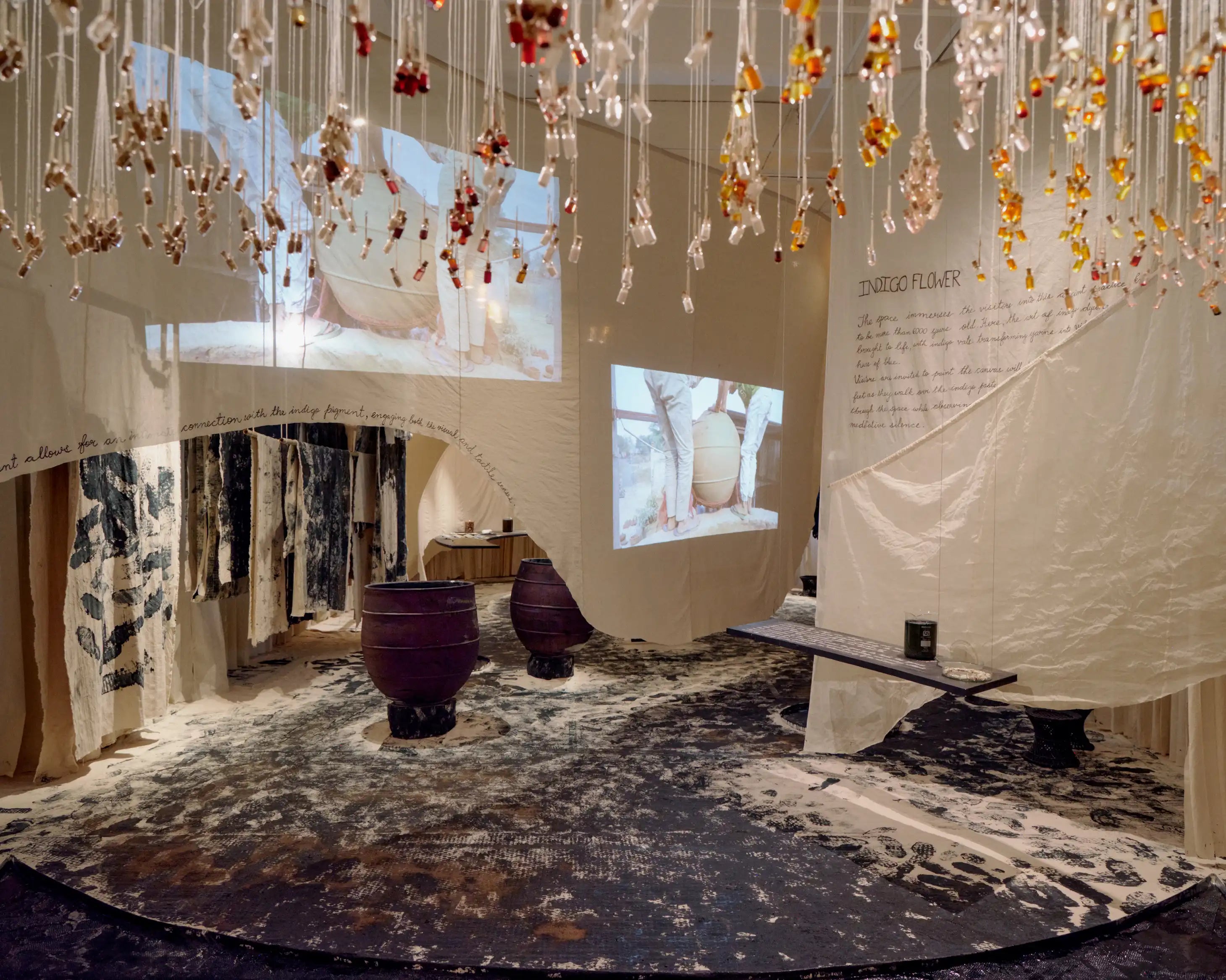
An invitation to step into the magical blue of Indigo (literally), our textile art featured at the Serendipity Arts Festival 2024, Goa, not only celebrates the Indigo Paste but also welcomes the audience into the larger world of natural Indigo, exploring and reinventing the potential of this plant-based dye.

What is the Indigo Paste?
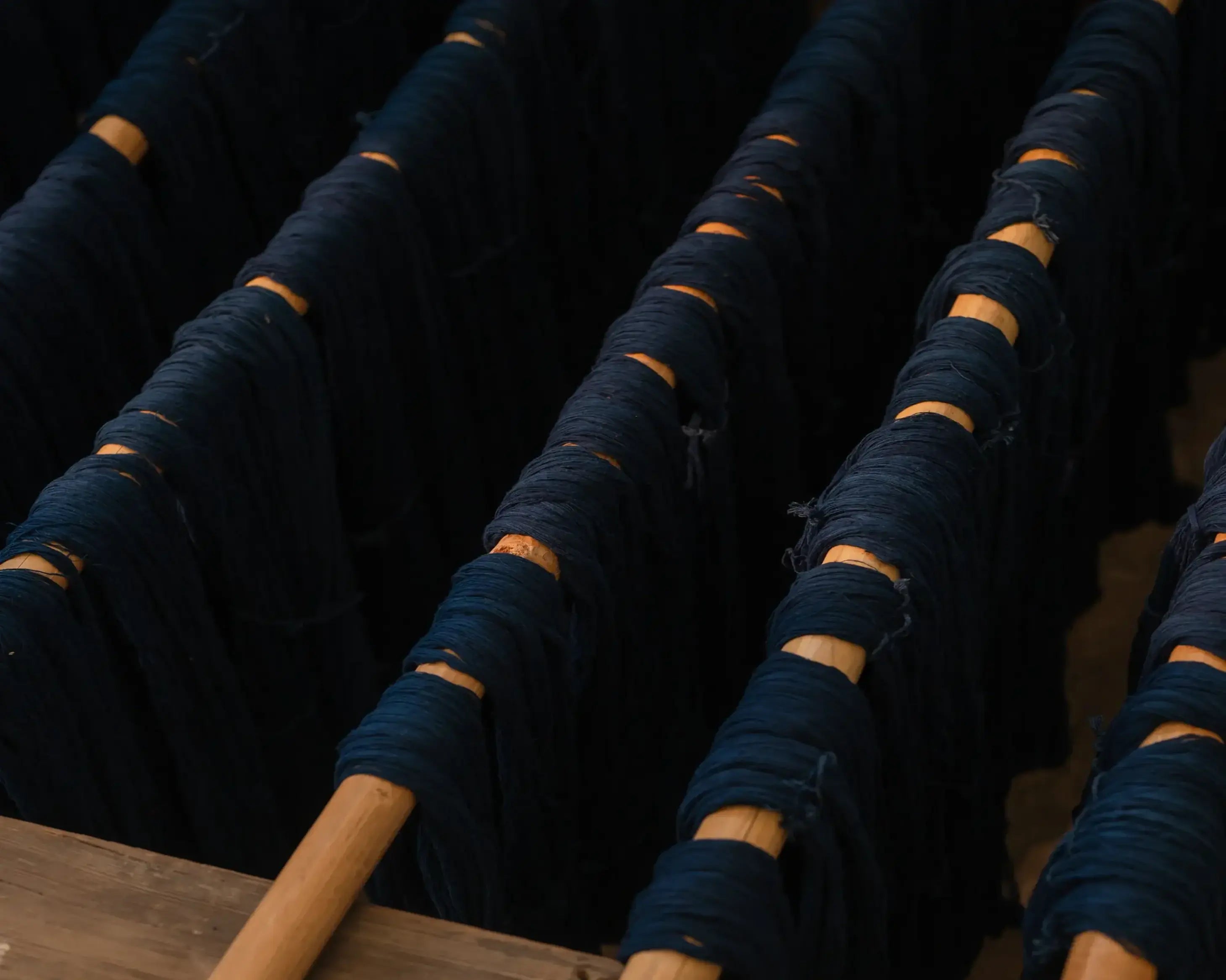
The primal intelligence of Natural Indigo has always been a part of our story. Indigo is created, explored and studied using traditional methods and aged vat fermentation in a natural, sustainable way. We also cultivate the plant using regenerative biodynamic farming techniques, sustaining soil health and holistic ecological balance. With this respect for nature and the ancient knowledge base, the brand has continuously innovated and invented fresh concepts, remaining 100% natural in its approach.
Since ancient times, Indigo has been a liquid dye; a fabric or yarn could be dipped into to achieve the rich, deep, textured, beautiful blue, as seen in a natural indigo dyed mens shirt. But beyond this, the hue could not be printed or painted in a pure natural way, as it functions through the science of oxidation and reduction. Even if you dip a brush in the liquid, by the time your brush reaches the canvas, it will react with oxygen in the atmosphere and will not really fixate onto the fabric to create a pattern or print.
With years of R&D and experimentation, we wanted to introduce Indigo in the same living state, fluid, responsive, and utterly primal, but for the first time, not as a liquid. This led us to a breakthrough: the brand’s proprietary 100% natural Indigo paste, developed with time, patience and precise artistry. This intellectual property transforms Indigo into a ready-to-use paint that can now be used for painting, block printing and more, preserving it as a medium while keeping its purity and essence intact. The lesser amount of water and resources required for its creation also makes it extremely environmentally friendly.
The paste does not oxidise quickly due to an element that coats it almost as an invisible layer. This controlled environment results in the paste having a longer shelf life. Traditional vats require constant attention and control of the environment, as well as vat conditions. However, the paste, stored in a closed container, remains alive for a year. It is durable, timeless and aids us in using the colour in a much more diverse, versatile way.

Indigo Flower: The Experience
Imagine a space in muted ecru tones that wraps the room in softness, serenity and calm. This composed, balanced space invites you into an immersive experience. As the footsteps fall into the room, the footwear is covered with an ecru cloth bag, then they step into a pool of Indigo paste. The floor in itself is converted into a vast canvas layered with a fabric with a rice-paste resist print. As the viewers walk around, leaving imprints of blue on the canvas, they witness a dyer at work with his Indigo vat, short movies explaining the material, delving deep into the process and the history and cultural significance of Indigo. They experience the concept and story of Indigo while engaging with the material, as they unknowingly keep creating an artwork by simply walking around.
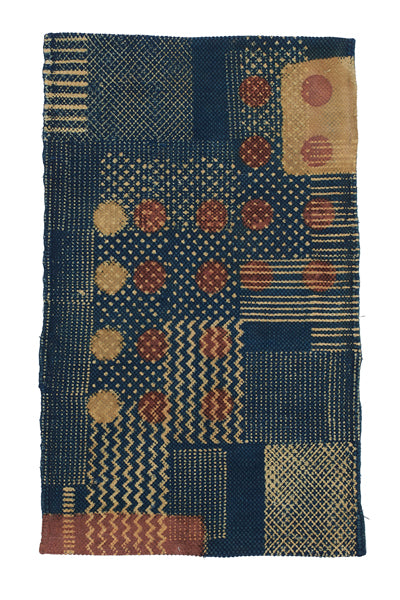
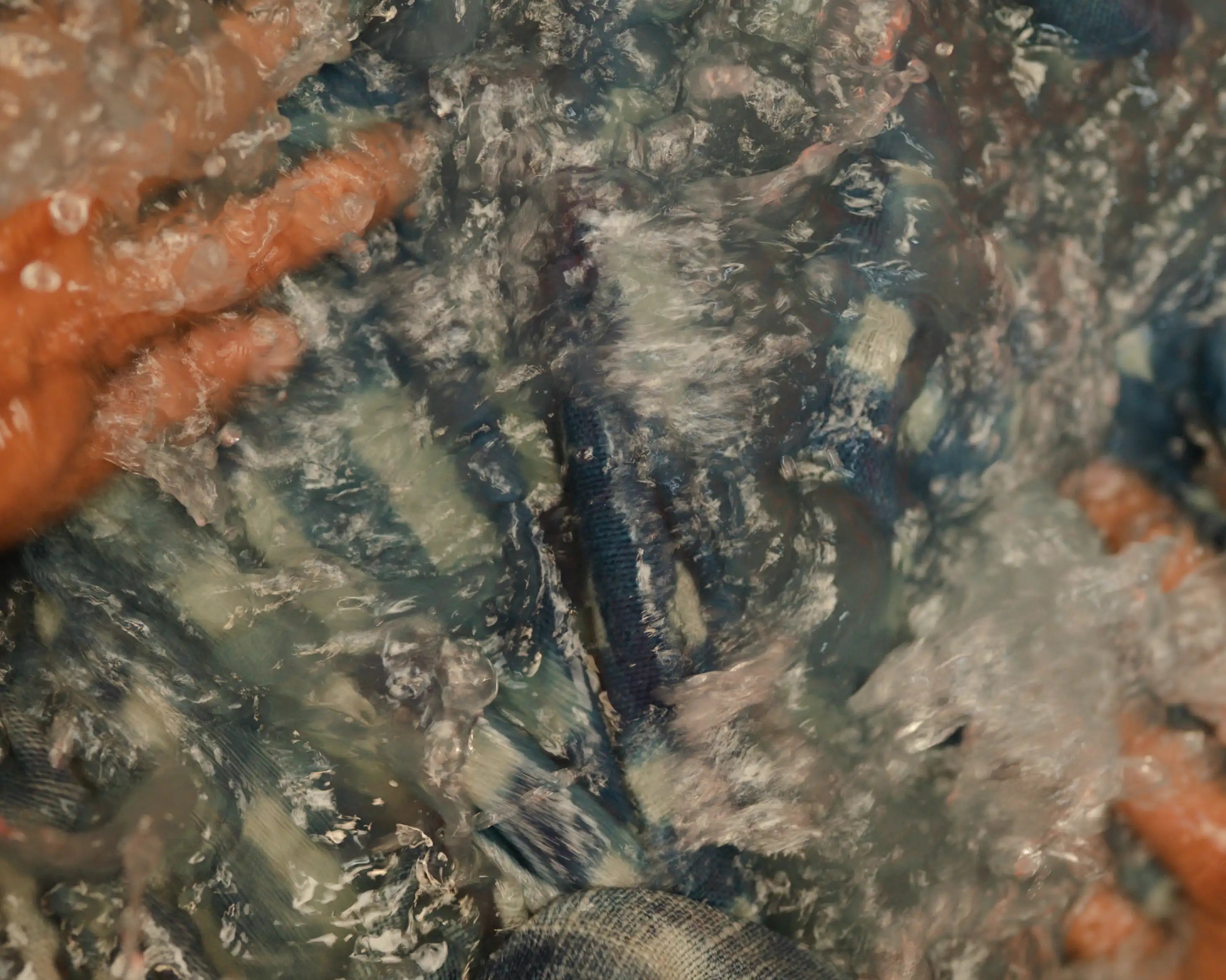
The Indigo paste met water as the canvas (fabric) was washed, and its oxidation created a vivid, deep blue, while revealing the resist artwork of dried leaf motifs underneath, as if one was actually strolling across an autumnal landscape. The final artwork left behind is raw, immersive, and both a homage as well as a revival of nature’s intelligence, mystery and unbelievable beauty. Born of movement, the creation was as performative as it was material.
Indigo Flower is a series of monumental textile artworks that feels like a future-folk artefact born from earth, movement, and memory. It honours the past while unveiling the vast possibilities of the future with pure reverence for nature, and humans as part of it, not against it!

The Revelation:
India’s relationship with Indigo spans millennia, where the rich blue has been revered for its healing properties. It is a breathing colour that has shaped economies, textile traditions, and spiritual practices. By reintroducing its velvety depth and tactile richness, the motive was to experience the dye as a material and as a philosophy.
Like the making of natural Indigo, the process of creating this artwork itself was a meditative one. With wonder in their eyes, we watched the audience slow down, observe, understand and connect. Posed against the ecru of the space, the deep, rich Blue claimed attention and became a focal point. The larger-than-life panels positioned Indigo as a presence—one that speaks volumes in silence and commands the room with its quiet power. It brings back conversations of sustainability and preservation of nature’s wonders. The piece is therefore not only painted but performed to tell a deeper story. A story that flows, connects, and touches something deep in the soul.
We have spent years rebuilding a positive, indigenous vocabulary for Indigo. Fashion is simply the vehicle; the deeper work is cultural, where we restore knowledge systems, spread awareness, and renew our relationship with materials born from the land. Art imagines the world; craft builds it. The Indigo Flower installation is a small gesture toward this equal plane—where art, craft, and fashion move together as one continuum.
Also Read:-
11.11/eleven eleven Care Guide: For Longevity of Naturally Dyed Garments
,%20our%20textile%20art%20featured%20at%20the%20Serendipity%20Arts%20Festival%202024,%20Goa,%20not%20only%20celebrates%20the%20Indigo%20Paste%20but%20also%20welcomes%20the%20a...)